
Costly Raw Material
Silkworm Production :Thousands of silkworms are needed to produce one kilogram of silk, and this time-consuming and expensive procedure.
Limited Supply: Because silkworms are climate-sensitive, droughts, floods, or pests can lower the supply of silk, which would raise costs even if demand remained constant.
Labor-Intensive Weaving
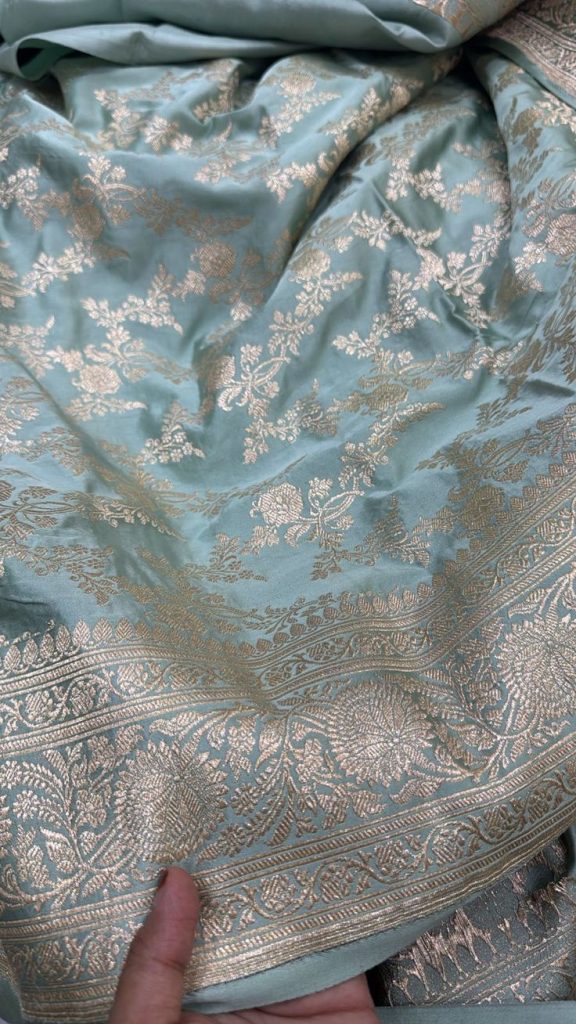
Handloom Craftsmanship: Each silk saree is meticulously handwoven by skilled artisans, a process that might take weeks or even months in contrast to mass-produced textiles.
Skilled Labor: The final cost is mostly determined by the time and skill that artisans engage in this procedure, which calls for extremely specialized knowledge and skills.
High-Quality Materials
Pure Silk: The cost of the saree increases when pure, premium silk, such as Mulberry silk, is used.
Genuine Zari: Pure gold or silver zari threads are used in many pricey sarees, which adds significantly to the cost.
Cultural & Brand Factors
Heritage and Exclusivity: Silk sarees are distinctive, uncommon, and priceless antiques because they frequently carry a rich cultural heritage and centuries of tradition.
Brand Reputation: Because of their reputation for excellence and craftsmanship, well-known companies frequently charge more, which raises the cost.
Seasonal Demand: Due to increased demand, prices may rise during wedding and festival seasons. New, limited-edition collections may also fetch higher costs.